Saturday, September 25, 2021


THE BERTRAMS

Anthony Trollope (1815-1882)

George Bertram, Arthur Wilkinson, and Adela Gauntlet grew up together at Hurst Staple, a small community near the Hampshire border in England.  Adela was an orphan who lived with her aunt;  Arthur's father, a pastor, died early, leaving the manse to his wife, and George lived with his uncle, old George, who had made a fortune in the financial abattoirs of London.  As the three grew up, young George and Arthur remained friends even when they went to Oxford while Adela lived a more or less solitary existence with her aunt.  She had feelings for Arthur, but the two hadn't at this point become more than neighbors.  When the boys graduated from college, George received a double first degree, one of the highest levels of achievement offered, while Arthur only got a second, even though he had studied much harder than his friend.  So Arthur decided to accept the parsonage at Hurst Staple, while George anticipated a blazing career in the high society of the City.  Arthur gradually came to terms with his disappointment and made plans to marry Adela, but since his mother received most of his income, he felt unable to propose, not having the wherewithal to support a wife.

George waffled around for a while, toying with authorship and having a good time.  His uncle wanted him to study law, but George wouldn't commit to that.  In order to give his nephew a broader experience of the scope and vicissitudes of life, he persuaded him to embark upon a tour to the Middle East.  George joined a group of tourists that visited Jerusalem, where he became acquainted with Caroline Waddington, an English orphan accompanying her aunt.  George falls for Caroline and has an epiphantic experience on the Mount of Olives, where he imagined himself walking in the footsteps of Jesus.  But it doesn't last very long, and when he met his father Lionel, he allowed himself to be swept away to the alluring attractions of Constantinople.  Lionel Bertram was in the military.  His job involved traveling to foreign capitals to adjust minor difficulties arising with the locals over British policies.  George soon discovered that his father's real activities were feral, in a financial sense:  he was a spendthrift and a scavenger after all the money he could get his hands on, regardless of the source.  Disillusioned, George returned to London.

Time passes;  George the younger continues undecided;  he tries being an attorney and is unsuccessful, so he writes a short book which achieves a minor bump in the literary market.  He continually sees Caroline, but she is getting tired of his indecisiveness.  When she meets an old school friend of George's, Henry Harcourt, she shares some of her discontent with him.  Harcourt had had a great success at Oxford also, and had striven greatly to make a life as a politician.  He got himself elected to Parliament, and was sanguinely expecting a knighthood in the near future.  And he had also fallen in love with Caroline, mainly because he viewed her as decorative addition to his political and social ambitions.   George is irate at what he sees as disloyalty, and the burgeoning connection with Caroline is shattered.  

Meanwhile, Lionel has arrived in England, in the town of Bath, and is busily worming himself into the social fabric of the feminine social network.  But, mainly because of the interference of Sally Todd, one of the brighter butterflies in the communal meadow, his reputation precedes him, and he finds himself increasingly isolated.  Then old George passes away.  During his last days, there was a gathering of the clan at his mansion, and one of them was Sir Henry Harcourt, who was counting on Caroline inheriting massive amounts of money so he could marry her and pay off his burgeoning debts.  But he's left out of the will, so he returns home and shoots himself.  Arthur finally summons up the gumption to face his mom and appropriates enough money to enable his marriage with Adela to take place.  Lionel gets nothing.  Five years pass and Caroline and the remaining George marry and live fairly contentedly afterwards.

From the bit of research i did, this book was written when Trollope was about half way done with the Barsetshire novels.  Maybe it represented a sort of break from that intensive effort, or, since the main theme of the book was the damage that money and the lack of it can do to all levels of society, he may have wanted to get away from the pleasant rural atmosphere of Barsetshire for a while.  Since he wrote so much, getting up at five every morning to write his books for several hours, maybe he just was trying to change the rhythm somewhat.  I thought this was a pretty good effort, although somewhat ragbaggy in its often unpredictable switches between situations and locales.  But Trollope usually has interesting things to say about the human condition and is therefore almost always worth reading.

Saturday, September 18, 2021


ELEANOR THE QUEEN

Norah Lofts (1904-1983)

Eleanor of Aquitaine was probably born in 1122, although the date is not a certain one.  She was raised mostly by a religious order, receiving an excellent education to match her superior intellect.  She was fluent in French and Latin at least and later in English, undoubtedly.  In her late teens, she was slated to be married to Louis the King of France, but, being in love with young Richard de Vaux, she resisted until Richard was accidentally on purpose slain by a sword in the back.  After becoming the Queen of France, she had two daughters over the next few years, but was in disgrace through lack of producing a son and heir to the throne.  The Crusades were well underway by this point and Eleanor took part in the second one, acting as one of the leaders of the French contingent.  Unfortunately, while crossing the Phrygian Mountains in central Turkey, the segment of knights with whom she was traveling got too far ahead of the main army, which was attacked and seriously mauled by native Turks.  Eleanor was blamed, partly, for her part in agreeing to outdistance the rest of the army.  When the Crusaders reached Jerusalem at last, she was mildly ostracized from the leadership, and was thus unable to introduce a sane voice into the squabbling disagreements among the other commanders as to their next goal.  Unfortunately the lure of Damascan wealth was too much for the generals to resist and the army spent its strength and power uselessly in besieging that city's walls.

Soon afterwards, the European members of the force left by boat to return home.  Louis of France then divorced Eleanor ostensibly for not producing a son and not too long afterwards she became somewhat enamored of the Henry II, the Duke of Normandy.  They were married, and upon the death of King Stephen, he became the King of England.  The next few years were mainly taken up with uniting the kingdom under one ruler.  There were around 1100 separate baronies in the country at that time, and all of them spent their time and substance fighting with one another.  Henry succeeded in eliminating most of the petty infighting and through his superior resolve and with his seasoned armed force, managed to unite the country, more or less.

Henry was not a very loyal husband.  He had lots of mistresses and when one of them died, he accused his wife of poisoning her and sealed her up in Winchester Castle.  The real reason, probably, was actually because Eleanor wouldn't agree to allow Henry to depose her son Richard, who was at that time King of Aquitaine.  Henry wanted to remove Richard because he was too good of a tactician and also because he wanted his other son, John, the King of Ireland, to take his place.  The politics of that time were just as involved and contorted as they are today.Anyway, Eleanor spent the next fifteen years in durance vile, so-called, in a cold cell with minimum comforts and clothes.  

Meanwhile, Henry had his own problems.  One of his best friends, Tom Beckett, a sort of Catholic functionary, had done very well in the priesthood and after many years, had been promoted to be Archbishop of Canterbury.  He was ambitious and wanted to spread Catholicism throughout the kingdom and be head of the entire business.  Henry didn't like this too much.  There's no evidence that he said, as Shakspeare would have it, "will nobody rid me of this turbulent priest?", but shortly after, Tom was found dead of multiple stab wounds.  Henry was not a person with very many limits on his personal behavior.  As Ms. Lofts stated once, "Henry's reaction to weakness is to stomp on it".

Henry finally died and Eleanor was released from her cell to become the reigning regent of England and Aquitaine for several years.  The book ends with her in charge and Richard once more in the Holy Land, trying to "free" Jerusalem.

The novel/history was well written.  There was a lot of invented dialogue, of course, but most of it seemed to mesh with the actual facts pretty well.  It was all in English of course, when people of the day actually spoke French or a version thereof - Aquitainian?  The ending was a little abrupt.  Eleanor lived for another twenty years or so.  She helped free her returning son from the prison in which he was incarcerated near the Danube, then moved back to her beloved Aquitaine, living peacefully until she passed away.  Back in England, Richard was about as pugnacious as his father, spending much of his energy and substance in wars with France.  He died in a small siege in that country at the early age of 41.  Richard, Eleanor, and Henry II are all interred in the same place:  the abbey of Fontrevault in France.

I liked this novel quite a bit even though it was a bit dated.  Ms. Lofts is a smooth writer, and this work blends the historical record nicely, logically segueing from one episode to another.  Sort of like lolling about in a canoe on a quiet lake in the sunshine, to be metaphorically extreme, haha...

Friday, September 10, 2021


 TALES OF PIRX THE PILOT & MORE TALES OF PIRX THE PILOT


Stanislaw Lem (1921-2006)


The above pictures are there just to represent the type of unusual mind possessed by Dr. Lem.  These two books describe the adventures and mishaps in the life of Pirx as he graduates from the Space Academy and pursues his career in exploration and colonization of the planets in the Solar System.  "The Test" describes how Pirx flubs his final test while graduating, piloting a ship from initial take-off to the moon, but how everything, accidentally, turns out perfectly in spite of his ham-fistedness.  Each tale in the balance of the book and its successor features a new predicament for Pirx to either solve or muddle through.  There's an ongoing atmosphere of sardonic humor permeating many of the early stories, but as Pirx and the reader grow with experience, the tales magically evolve into subtle analyses of human nature and its relation to the utter strangeness of outer space.  

Several of the stories in the first book  are basically mysteries.  In "The Accident", Pirx is sent to the far side of the moon where two scientists have died under mysterious circumstances.  The descriptions of walking across the surface and through boulder fields and craters are superb, as if Lem himself had actually been there and was merely recording his own experiences.  When Pirx arrives at the remote station after doing a bit of lunar mountain-climbing, he manages to make sense out of the various electronic clues left by the late victims, and to solve what seems to be a series of nonsensical events. 

 In fact, as Pirx ages and the tales become more sophisticated, the relations between robot and human become more important.  Prejudice is examined, amorality plays a role, and the history of anti-android bias is educed.  

Lem doesn't just pontificate about what he thinks human attitudes and morals should be, he arranges his plot structures to show what happens under circumstances that bring out latent, instinctive convictions lurking in the human psyche.  In "The Inquest", an advanced android, the equivalent of a human being, controls an accidental mishap in order to alter the fabric of civilization so as to favor the ascendancy of robots in the future.  During an attempt to deposit satellites in the rings of Saturn, one of them is stuck in the ejection slot while being fired out, and the resulting forces endanger the ship.  Pirx calculates the android's intentions and is able to explicate his behavior.

And in the final story, "Ananke", the force of psychological conviction leads to a major disaster on the surface of Mars, when a 1/4 mile long freighter crashes into the planet.  The predisposition to detail has led the designer of the on-board computer to over-program the security protocols of the computer so it gets overloaded while trying to land the ship and literally dithers its way into a major cataclysm.

I've read most of Lem's work, i think, and i have the greatest respect for his penetrating and adept intelligence, as well as his underlying humor and wisdom.  There is a lot of techno-babble included in the context which might put some readers off, but Lem's intentions and perceptions are spot on as regards the human race and its behavior.  I'd recommend these books to any person interested in experiencing what it might really be like to explore other planets in the near - or remote - future.


Saturday, August 28, 2021


TALES OF A TRAVELER

Geoffrey Crayon (Washington Irving). 1815-1882

A collection of tales in four parts, sorted by title, hence:  Strange Stories. by a Nervous Gentleman,  Buckthorne and his Friends,  The Italian Banditti, and The Money-Diggers.

The first group relates the experiences of the members of a hunting party, lolling about in their chairs, after dinner, in an old mansion in 19th C. England and telling each other ghost stories.  The oldest diner tells a story about an ancestor who spent the night in the tower of an old French manse and was awakened after midnight by a tall lady dressed all in white who warmed her hands at the fire and slowly drifted away.  According to the host the next morning she was the Duchess of Longueville.  During the reign of Louis 14th, she was a participant in the civil war of the Fronde, and was upset by the imprisonment of her husband the Duke and some of his friends.  Then another raconteur recites one about his old aunt who solved the mystery of groans in her bedroom emanating from a large picture of her husband, who had died shortly after their wedding.  An Irish Captain then honors the group with a description of his grandfather, a bold Dragoon.  Stuck overnight in Bruges, on his way to England, he spent the night in an ancient hostelry and observed some very strange behaviors as regards the furniture occupying the apartment.  Next, the unfortunate fate of a young German antiquarian who became entangled with the fate of a beautiful lady and her appointment with Madame la Guillotine.  The tales continue, and this section ends with a peroration concerning a young Italian student and his fatal attraction to Bianca, the daughter of a Genoese nobleman.

In Buckthorne and His Friends, we learn about the life and adventures of a literarily inclined member of the English upper classes.  Buckthorne loses his inheritance and survives by taking positions in a variety of enterprises.  He joined a traveling troupe, tried his hand as an essayist, and eventually wound up attending classses at Oxford University.  Later, failing in most of his endeavors, he returns to his native soil, only to find that his father has died, leaving his money and property to a local runagate.  Concerning this period in his life, he comments:  "I was at that age when a man knows least, and is most vain of his knowledge, and when he is extremely tenacious in defending his opinion upon subjects about which he knows nothing."

In The Italian Banditti, we learn a lot about the culture and behavior of Italian outlaws and how they survived during the early 1900's.  Stories about kidnapping, thievery and murder are related by one traveler after another as they spend the night in an inn in Terracina.  How a brave Englishman single-handedly rescues the wife of a fellow passenger through the judicious use of hot lead;  the fate of a young maiden whose father wouldn't pay her ransom; and how an artist used his skills to obtain release from a bandit captain.  The final tale describes a battle between the members of a stage coach and its military escort, and the desperate attempt by a gang of mountain-dwellers to loot and kidnap the travelers.

The Money-Diggers has to do with the early inhabitants and settlers of the Dutch enclave of the upper Hudson river.  In The Devil and Tom Walker, we learn the ultimate fate of a poor miser who acquires a large fortune as the result of taking a short cut through a swamp.  Later we visit the family of Wolfert Webber, the last in a long chain of cabbage growers who becomes enamored with the possibilities of "gold as found" and with the thought of hidden buried treasure.  A red-headed stranger, a violent storm and the secret activities of a mysterious stranger all lead to a rather peculiar, and modern, salvation for poor Wolfert and his family, after several years of searching, fruitlessly, for the ill-gotten gains of Captain Kidd.

Irving is just a delight to read.  His sentences flow like water, and impart a cozy confidence in the reader that a master story-teller is in charge.  He's not particularly deep, or profound, but he's very human in the best sense:  civil, cultured, knowledgeable, and, above all, friendly.  It's like talking to your best friend, or visiting your great-aunt who pushes chocolate cookies at you.  i'd recommend his work highly to anyone at all interested...

Saturday, August 21, 2021


THE CONQUEST OF THE MOON

Andre Laurie 1844-1909


Norbert Mauny, scientist, adventurer, explorer, entrepreneur, and astronomer is visiting his friends the Kersains in the town of Suakim, Egypt near the Red Sea. Present are the ambassador, Mr. Kersain, his daughter Gertrude,  her uncle Dr. Briet, and Bucephalus Coghill, another explorer.  Mauny has a plan;  he has identified a large mountain of ferrous pyrite in the middle of the Bayouda desert and intends to magnetize it with the use of solar-powered generators to attract the moon down to the Earth's surface so he can explore it and identify economic resources therein that could be commercially useful.  Mauny persuaded a large corporation to finance his endeavor, and has persuaded Gertrude and Bucephalus to go along.  Also in the company are Virgil, an old Sahara hand, and three representatives of the corporation:  Wagner, Vogel and Gryphins.  They are ostensibly present to supervise and regulate expenditures.  After Virgil arranges for 800 camels to convey the massive amount of materiel, the group begins the trek across the desert, but are soon delayed by a local sheik who demands a toll.  Kaddour, the sheik's vizier, demands an outrageous fee for the caravan to pass, but eventually the two parties come to terms and the explorers are allowed to continue on their way.

The Tehbaldi plain has a 5000 foot high mountain made of "bisulphides of iron" that is Norbert's goal.  He plans to level the top of it and install his generators around the base and thereby magnetize the prominence using sunlight.  But first he has to isolate the pile from the underlying sand, so he drills a hole from the top downward to the bottom and uses the gensets to melt the sand into glass which he plans on pouring down the hole;  the idea is to spread it out at the bottom so as to form an insulating barrier to keep the electrical fluid from dissipating in the earth below.  Meanwhile, the three "commissioners", Vogel, Wagner and Gryphins, do all they can to frustrate Norbert's schemes because they believe it's all a waste of money.  They spend all their time playing cards and drinking.

This all takes place in the 1870's, when the Mahdi is about to initiate a Jihad to wipe the earth clean of unbelievers.  But his forces have been temporarily pushed south, so operations continue post-haste at the mountain.  But Kaddour appears with another army, intending to halt progress and grab all the machinery and money for himself.  Norbert makes friends with him, however, and he joins the company of adventurers.  

The moon approaches and everything is ready to get underway.  At its closest point, the generators are fired up and the resulting magnetic field does indeed begin to pull the moon closer.  Suspense mounts until a gigantic earthquake is felt and the voyagers pass out.  Since they've had the forethought to build themselves a series of leak-proof buildings on the mountain-top, they all live through the transition to the moon's surface when it collided with the Earth.  The moon resumes its usual orbit and the party wakes to find themselves on the moon.

Over the next few weeks, they explore the surface, finding the remnants of huge temples and statues, apparently created by an extinct race of giants, all made out of gold.  Norbert has designed oxygen tanks for walking on the surface.  They consist of tanks full of air connected to face masks via tubes that carry the gas through a sort of squeeze box carried under the left arm.  They are squashed by the upper arm when flow is needed.  In the 1/6 gravity, Norber, Gertrude and the others dance around the many craters and walls in sheer delight.  Later, Norbert travels to the dark side and is awed at the lightless panorama of stars. 

When they decide to return to Earth, the three commissioners, who have behaved badly, sabotaging and damaging the equipment in their attempt to destroy Norbert's plans, are jailed because they've tried to take a lot of the gold back with them.  For various reasons, they are left on the moon along with Kaddour when the mountain, driven by the gensets, returns home.  It is explained that two of the malefactors had kidnapped Kaddour when he was young and forced him to act in a circus for years during which he nursed irrevocable hatred for them.  On the edge of departure, he refuses to let them aboard and since time is of the essence, the others are forced to leave him behind.

Back on Earth, they are picked up by members of the British armed forces who are floating down the Nile on their way to the encampment.  After proving who they are, however, the luniacs are still not credited, the authorities believing that stress and dire experiences have warped their brains.  In the end, Nobert and Gertrude marry and they all live happily ever after.  Upon reaching England, they learn that the savior of Khartoum, General Gordon, has been slain by the Mahdi's forces along with all his troops and they express their gratitude that they escaped that holocaust.

I wrote to India to get a copy of this book, as it's the only other one by Laurie that i could find that had been translated into English.  The printing was not very well done, with pages 18-31 missing, much of the lettering was smeared so as to be illegible, and quite a few pages duplicated.  On the other hand, it was great to be able to get a copy at all.  Laurie wrote many books and it's a mystery to me why some one hasn't translated some of them, as he is in actuality a veritable second Verne.  Imaginative, descriptive and easily comprehensible, both of his books that i've read have held me glued to the page to see what was going to happen next.  i'd recommend his work to anyone, if they could manage to find it...

P.S.:  FeS2d, FeS, are sometimes magnetic, depending on what other molecular additions are included in the crystal matrices, so Laurie's not totally off the wall with this idea.  On the other hand, he certainly had been at some point exposed to Newton's inverse squared law, describing the attenuation of gravity and magnetic waves over distance, so his idea that any source on earth could have had an effect on the moon was sheer invention...  but an interesting idea nonetheless...

Sunday, August 15, 2021


MEMOIR AND CORRESPONDENCE OF CAROLINE HERSCHEL (1750-1848)

Edited by Mary Herschel in the 1870's


Isaac Herschel was an oboist with various German orchestras and bands during the early 1700's.  As his family grew he searched for more permanent employment and found a position with the National Guard Band in Hanover.  William was his eldest son:  he received a musical education from his father and others and became an accomplished violinist, organist and composer.  His younger brother Alexander studied the cello and developed into a formidable performer who was a popular soloist of the time.  The great earthquake in Lisbon in 1755, as well as intimations of war with France shook the stability of the family such that Isaac spent a year in England, near Bath, establishing connections and performing in various musical groups.  William went with him and soon was recognized as a superior artist both for his compositions and his organ playing.  William was a driven personality with a maniacal urge for learning.  He became interested in astronomy after Isaac died at 61 from overwork, and devoted all his spare time aside from making a living as a musician, to studying telescopes and astronomy.  After trying to handle it all by himself for several years, he traveled back to Hanover to persuade his sister Caroline to return with him.

Caroline was invaluable.  She performed in William's concerts, kept his house in good order, sewed socks for extra money, and, ultimately became as engrossed as William in his new hobby, watching the stars.  There was an enormous amount of information to be recorded as William identified new stars and planets through a telescope he'd made himself.  Caroline was kept busy as a sort of secretary, initially, transcribing the oblique and right ascension details that needed to be registered for each new astral object discovered.  She gradually became fascinated herself in searching the heavens, and as her skill improved, ultimately located eight previously unknown comets.

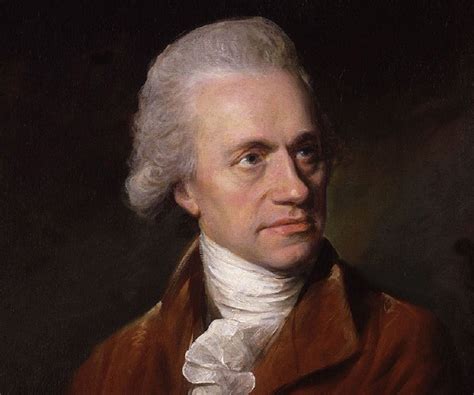
 In those days, lenses were made by hand, produced through intense and prolonged grinding to achieve the correct angular deflections to suit the telescope being created.  The largest lens William made was four feet in diameter, made to fit a telescope with a forty foot focal length (picture above).   As he ground away on his lenses, Caroline would read to him from many of the contemporary authors:  Sterne, Fielding, Smollet, etc.  And since her brother was also a full-time musician she also copied out scores for his many compositions as well as the parts for the individual musicians. 

As time went on recognition came to both of them from the Royal Astronomical Society in London and from foreign bodies as well.  Caroline not only received a medal from that organization, but one from the Irish Astronomical Society.  But William's health began to suffer from his intense workload and from clambering around in the dark.  Once during a windy night, the framework from which he was viewing  collapsed and precipitated him 15 feet to the ground.  And Caroline injured her leg one night while running off to get some needed object.  She experienced a short but alarming period of blindness at one point.  The lenses in those days were made of bronze compounded with arsenic and it has been speculated that leaning over his work and grinding so industriously on the metal may have exposed William to arsenic poisoning.  He confessed at one point to being bothered by dizziness.  By 1785, William and Caroline had accumulated a catalog of 1000 new nebulae, which they published to acclaim and admiration from astronomers world-wide.  In 1800 that number was increased to 8,760.

William continued working hard, but he gradually lost strength and finally passed away in 1822.  Apparently Caroline was so distraught by the occurrence that she left England immediately and returned to Hanover, a decision that she regretted for a long time, as she regarded the relatively uneducated Hanoverians as ignorant boobs.  She maintained her connections with the scientific world, though, and periodically received medals and honors from many European countries.  In particular she remained close to her nephew John, William's son, who became an astronomer like his father.  John spent three years in Capetown, South Africa, mapping the southern constellations, and letters about his discoveries between aunt and nephew were frequent and informative.  As well, Caroline was still catching up on cataloging and publishing the voluminous collection of information that had accumulated over the last thirty years.  Other events provided peripatetic interest over the years.  She went to a Paganini concert and had an interesting conversation with him.  Alexander Humboldt paid her a visit.  She recorded a hail storm in which the ice balls weighed 3/4 lb. each.  Her picture was painted by a professor Teilmann.  Another well known astronomer and generally scientific genius was Mary Somerville, with whom Caroline exchanged a long series of letters.  But as the years passed and her vision began to fail, she became house-bound, staying almost all the time in her room and sewing or writing letters.  She started a "History of the Herschels" but never finished it.  She passed away at the very advance age of 98.

This was a fascinating look at the early age of astronomy and a sort of reality check that graphically described how hard people had to work in those days, especially when involved with the sciences as ruled by staid Societies and dubious financiers.  I recall the same sort of barriers that inhibited the researches of William Smith, geologist, about the same period.  Caroline was driven initially by her love for her brother, but became entranced with the stars and almost as much of a stellar explorer as William.  At that time, no one knew what comets were, or how to observe them, and her discoveries were startling as well as illuminating, instilling a bit of light into some of the dark mentalities of the society she lived in.  I liked this book a lot and i wish there was more information about her.  The top picture is of Caroline.


Sunday, August 1, 2021


POLIOPOLIS AND POLIOLAND. 1900


James Macdonald Chaney  (1831-1909)


Gus Heins, mechanic par excellence, has a secret dream.  He wants to soar to the North Pole in a balloon.   His best friend, the narrator of the story, lost track of him due to job constraints after they both graduated from college.  But seven years afterwards, they met fortuitously and resumed their former friendship.  During the interval, Gus's father had died and left him a large farm in the midwest.  Seizing the opportunity to realize his dream, Gus had erected a very large barn and a fully-equipped machine shop and used them to initiate the construction of a balloon.  The narrator had recently been fired from his job and, somewhat reluctantly, agreed to help his friend achieve his goal.  The penultimate product was a sizable balloon with two ten foot wings that flapped, powered by a 33 lb. gas engine made of aluminum, a rudder fabricated from steel and brass and a basket about eight feet square to hold them and their accouterments.

They set off on May 18 and made rapid progress toward Baffin Island.  On the way they pin-pointed the location of the magnetic pole, partly through use of a planetarium:  a device invented by Gus that indicated the positions of the planets, moon and stars in relationship to any location on the Earth's surface.  (This instrument was very similar to the Antikythera orrery discovered just off a Greek island in 1901).  Using the planetarium as a guide, they steered the balloon toward the North Pole, noting the extensive fields of water in a "solidified condition" as they floated above the polar seas.  Several hundred miles later the atmospheric temperature seemed to be alleviating and they soon saw that the ice had vanished.  Flying over the open ocean, they espied a large island in the distance and as they approached it, they saw people scattering away from their proposed landing site.  But, curiousity overwhelming their fear, a crowd soon collected around the descending balloon.  Gus lit up his pipe and, smelling the tobacco, the people were reassured that the balloonists were actually human.  The island was about 125,000 square miles in area with a population of a million persons.  Agriculture was the principal employment, but there were extensive forests of large conifers as well;  one tree topping 367 feet.  Deer, dogs, sheep and fish were abundant and there were seams of precious metals and coal to be found as well.  The citizenry had emigrated five hundred years earlier from Northern Europe, mainly due to economic conditions;  they were trying to get away from what they regarded as oppressive dominance by the upper classes.  Sic:  "the general tendency of the laws is to make the rich richer and the poor poorer".

"Yustavus", a local engineer, befriended them and invited them to stay at his house, which was a prison-like edifice made of stone blocks.  The two adventurers noted that Yus was possessed of a telescope and a sextant that had been left by a polar expedition some fifty years previously.  Friendships developed with the local inhabitants and the visitors soon were accepted as honored guests.  Yus's daughter, Marie, showed interest in the planetarium and other instruments belonging to the newcomers, and Gus went out of his way to demonstrate how they were used.  Gus also was able to invent a few labor-saving devices to ease the life of the people.  He built a self-shuttling system adaptable to any loom which greatly increased the ease and production rate of woolen cloth.  He showed them what a gas engine was like and engineered a lathe for machining screws.

There was a bone of contention in the land, however, involving the official coinage.  Two systems were used, with silver constituting one level of value and gold coins a superior one.  The government tried to pass a law declaring that the gold standard was to be the official purchasing medium, while silver was relegated to a lower status.  The people soon realized that the end result would cause the already rich citizens to become richer and would place the lower classes in dire poverty.  A revolution occurred soon afterwards, during which five conniving politicians were arrested and four of them hung.  (I can't help but think this episode had something to do with the "Gold Standard" question that was occupying the media at that time).

At this point the story takes a sharp left hand turn in front of traffic and dedicates itself to explaining how the planetarium works.  Marie, being very interested in astronomy, learns how to locate all the planets in the solar system at any given time, such information being particularly useful in a land where six months of the year were dark and six months were sunny.  As a moment's reflection would indicate, during the "summer", the sun would circle around the pole without sinking, and during the winter gradually vanish.  Anyway, the book ends with Marie spotting the planet Saturn, which would be observable for the nest 23 years.

This was a very peculiar book.  Why Chaney suddenly decided to not write an ending to his story is somewhat of a mystery.  He was a Presbyterian Minister for 53 years and maybe he found himself caught in a trap of sorts, writing about the intensely scientific realities of the solar system and not paying attention to what he was being paid for.  It was pretty well written, and the explanations of the planetarium were accurate and complicated, but maybe he just got tired of writing.  Anyway, it was interesting and quizzical...