Tuesday, February 8, 2022


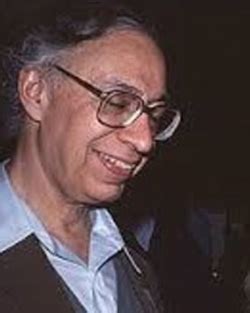
Slavomir Mrozek (1930-2013). @. Daniel Mroz (1917-19930 

I  love Mroz's artwork.  He illustrated books for both the above authors and more besides.  As I might be absent for a awhile due to heart issues, i thought i'd leave a bunch of his masterpieces for your edification, lol...  Mrozek is the top photo.  i have a post planned for his "The Elephant", but who knows if it will transpire...


Saturday, January 29, 2022


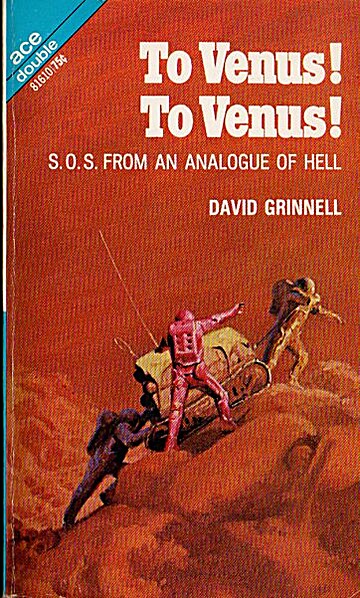
David Grinnell  (Donald Wolheim, 1914-1990)


In 1970, shortly after Neil Armstrong spoke his inspired words, Chet Duncan found himself trudging up a steep incline, swishing through the moon dust, on his way to rescue a fellow astronaut, Jim Holmes, who had had a mishap with his Lunar walker.  Holmes had been returning to the lunar lander when his robotic walker had frozen up and, not being mechanically inclined, he'd called for help.  After replacing a shear pin in the lower axle, they both returned to the small vehicle and made preparations to return to the orbiting module, their "mother ship" as it were.  Before they left, however, they received a radio message that the Russians had just landed the first Cosmonauts on Venus, which they described as balmy and temperate, with abundant and variegated flora.  Since there was some competition between the United States and Russia over "first landings" on alien planets, and since Venus was known to the U.S. scientists as a wasteland of dust and rocks hovering at a temperature of at least 500 degrees Fahrenheit, there was some debate as to what the truth was regarding the status of the inner planet.  It was assumed in the halls of Washington that Russia was ambitiously courting the good wishes of billions of their fellow Asiatic inhabitants, and that they would not be beyond exaggerating their spatial exploits and the discovery of a viable colonial site in order to capture the admiration of the oriental nations.

So NASA decided to send their own ship to the planet, just to clarify the picture, and to provide a bit of a challenge to the second Soviet vessel which was launched at the same time.   Chet, Carter and Quincy were delegated as the team assigned to verify or disprove the Soviet claims.  The three left in the module and after an uneventful trip reached an orbit around Venus.  All three entered the landing "bug" as they termed it, and left the module which was designed to maintain an orbit by itself around the planet.  They plummeted down through thousands of feet of dense clouds and only at several thousand feet above the ground were able to see the surface clearly.  High winds bounced the small bug around and when they finally landed, they discovered that one of the legs on the machine had been irreparably damaged, prohibiting take-off.  The landing had placed them on the sheltered side of a cliff, but the overhang would prevent them from being able to maneuver the bug into take-off position.  At first they assumed they were doomed, but then they remembered that the Russian vessel had already landed about 100 miles away from their location.  So the decision was made to attempt to walk to the Russian camp.  The three donned their servo-powered suits of armor, loaded up a power sled with their remaining supplies and began trudging.  The terrain was full of loose rocks and cracks and crevices that required them to follow a circuitous path while fighting the constant wind at the same time.  

After struggling ahead for several days the party arrived at a cliff that seemingly blocked the way ahead. But after a considerable time spent in looking for a way up, they found a cave that appeared to be fairly deep.  And so it proved.  Using their suit flashlights, they spent days crawling and walking through tunnels, all the while gradually gaining height as they went.  The food and water started to run low, and Carter, who had been depressed about their chances to begin with, vanished one night and the next "morning' they found his belongings and suit parked near a bottomless drop-off.  With the slight addition to their supply cache, the two continued on, laboring their way along, until they reached yet another cliff which was soon found to contain yet another cave.  In a few more days, as their water was about to give out, they found some rivulets in a dark corner.  But Quincy was getting tired of the trek and, angry at the hopelessness of their situation, he opened up his face plate to end it all.  To his surprise he realized that he could breathe.  They had evidently reached an altitude at which oxygen was available.  They theorized that since the poles were covered with ice five miles deep and the temperate zones were so hot, that when the icecaps were melted at the edges, the resulting run-off would be entirely evaporated, freeing the oxygen to accumulate just below the cloud layer.

At any rate, the two, heartened, continued on until they received a garbled message on their radio which they were able to interpret as Russian.  They soon arrived at the Soviet camp site and were given to understand that all the Cosmonauts had died except one and he was very sick.  And that, at this elevation, the terrain was indeed covered with strange plants and grasses suitable for human activities.  After they healed the Russian with some of the medicines they had brought along, all three flew up to the Russian module and headed back to Earth.

This was a science fiction horse of a different color; i guess it would be categorized as "hard" sci fi.  But as a variant of the space voyages of the late sixties and early seventies, it was pretty interesting.  Although i did slightly balk at the heroes finding all those caves just when they needed them.  Wolheim was a good writer, tho, and even if i was hesitant about reading this effort for "sci fi January" due to it being the second book by the same author, i was glad i did.  It riveted my attention, more or less, and provided interesting descriptions of  some of the chemical and geological mysteries of Venus, which, even if they weren't true, were diverting...  Probably next weekend i'll be back with another sort of book, now that January is over...

Saturday, January 22, 2022


Robert Silverberg  (1935-    )


After a war lasting one hundred years, a radioactive holocaust left much of planet Earth in chaos.  The next five hundred years saw the establishment of feudal kingdoms in almost all countries, with "Dukes" the rulers of each of the twelve enclaves encompassing the globe.  These leaders had acquired immortality perhaps due to lingering radioactive influences, and they reigned autocratically in the major cities.  The cities were also based on the feudal idea of security, with a central castle surrounded by business and residential districts.  Employment in the rural areas were principally related to agriculture and whatever mechanical or mining interests seemed appropriate in each vicinity.

Dale Kesley had been a farmer for five years that he knew of, as he had no memory of his life before that period.  He was rather tired of the unceasing grind, so when a stranger named Dryle Van Alen arrived at his farm and informed him that he had been brain-washed and that a brilliant future awaited him, he readily acceded to his proposed plan of abandoning his livelihood and accompanying him to Antarctica, where a 13th dukedom had been established.  Traveling by six-legged horse (mutations were common in this era), the pair journeyed to Galveston where they caught a freighter to Argentina.  South of Buenos Aires, they were captured by bandits after an exchange of gun fire and Dale was taken back to the capital to see Duke Miguel.  Van Alen had managed to escape.  The Duke, a smiling exemplar of cheerful autocracy, gave Dale a choice:  he could either be imprisoned or he could go back to America and assassinate Duke Winslow, the Duke of Chicago and then marry Narella, his adopted daughter.  Narella's father was Daveen the blind singer, known for his talent and psychic abilities;  his location was unknown but Dale thought he might be able to aid in recalling his past if he could locate him.

So Dale goes to Chicago and is captured while trying to kill the obese Duke.  The same night, however, he's rescued by a seven foot tall mutant named Lomark Dawnspear, a master of psychic manipulation who put all the guards to sleep.  Escaping on another six-legged horse, he leads the Duke's minions a merry chase through Illinois and Indiana but finally receives refuge in a "mutie city" (an enclave of mutant humans who have been isolated by "normal" humanity) situated in Kentucky.  Here he sees Dawnspear again and through the agency of a local teleport is transported in a flash to Antarctica.  The Antarctic capital city is wildly different than what he's used to, with large edifices in brilliant colors and designed in a plethora of varying styles.  He's taken to see the local Duke, who explains things to him.  (spoilers ahead)  In the first place, the Duke has psychic abilities also, and is a shape-shifter:  his alternate physiques are Daveen the blind singer, Van Alen, Dale's guide, and Lomark Dawnspear.  Dale remains confused about the purposeless of all that he's been through until Van Alen (his real identity) informs him that he is the successor to the throne for one reason:  he's not sterile, as all the other Dukes are, and that Van Alen is his real father.  He had hypnotized Dale five years before and made a farmer out of him to protect him from the other Dukes who were envious and fearful of how he might  jeopardize their powers.  Anyway, after a struggle, Dale agrees to accept the Dukeship and looks forward to revising the world.

This wasn't a great novel by any means, but it had interesting action scenes including gunfights, daring escapes, oddly shaped humans and horses and devious plotting.  I found it kept my interest, but i probably wouldn't read it again.  Of course Silverberg became a well-known sci fi figure in his later life (this was his first major novel) with a unique style and perspective.  The Majipoor Cycle including Lord Valentine's Castle have thus far been his most popular efforts, i believe...

Saturday, January 15, 2022


John Rackham. (1916-1976)  pseudonym of John T. Phillifent


Playgirl Selena Ash has just left the play-planet Shangri-la in a hurry and she's being chased by two guys in another ship.  Pierre LaCoste and Robin Delamar were friends and practical jokers with whom Selena had been having a great time with, but apparently they hadn't had enough fun and games and were racing after her for more.  She had just left the world's atmosphere and she had just begun checking the instrumentation as a matter of habit when she realized that someone had sabotaged her automatic navigational equipment which hurled the ship without warning into hyperspace.  By the time she got the problem sorted she realized she was about thirty light years away from anything.  Poking about in the circuitry, she found a bomb, which she quickly disabled.  Thinking about her situation, she realized that the navigational problem was probably Pierre and Robin's idea of a practical joke, but the bomb was something else again.  Maybe she was being victimized by space pirates!

Selena wasn't actually just a playgirl;  she had a secret identity as an agent for the Galactic Security Association and she was on a mission.  Five years ago an explorer named Jory Jensen had vanished  after finding a planet with intelligent plant life on it and Selena had been recruited to find him.  Now, evidently lost in space, she fixed the navigational system and it informed her that a benign world was in the neighborhood and that she was being pursued by two ships.  One of them was undoubtedly that of Pierre and Robin, but the second one was a mystery.  Arriving on the world, she liked what she saw, a vast plain with mountains in the distance and extensive forests bordering a large ocean.  Debarking, she went for a walk toward the adjacent woods.  Suddenly the figure of a man appeared in the corner of one eye and she immediately drew her blaster.  At the same time the weeds and brambles around her began clutching her legs and sticking thorns into her skin.  Being rapidly overwhelmed, she called for help and the man told her to think friendly thoughts.  He was dressed in a sort of swim suit and had a kind of ivy growing around his body, the end of which jutted out over his head.  There was a small blue bud glaring at her from the plant.  She struggled for a while and then managed to smile and began mentally admiring the botanical life around her.  After a bit the plant life backed off and resumed their normal plant life behavior.

The Man called himself Joe, but Selena realized that he was probably the lost  Jones.  They became friends and she learned that the whole planet was governed by one enormous tree that permeated the atmosphere with psychic energy devoted to friendship and love.  She persuaded him to guide her to where the tree was located and on the way they saw a battle taking place between two ships in the upper atmosphere.  One shot the other one to pieces and captured the two occupants, then proceeded to land near the distant mountain range.  Selena had identified the ship as one belonging to Pardoe, a notorious pirate, and she assumed that he'd followed her for the purpose of stealing the seeds of the tree which were rumored to react to mammalian thoughts, growing into any sort of material object required by the local sentiencies.  Selena and Joe anxiously increased their progress, but they were hampered by the indigenous wildlife:  Mountain cats like saber-toothed tigers and razor-billed birds that flew in flocks and tried to stab their victims, and crock beetles that lived near streams that liked animal flesh, sort of resembling land-based piranhas, were some of the more friendly denizens.  But eventually they reached their destination after days of scrambling through brush and warding off hungry and hostile predators.

Joe had warned Selena that the tree would take over her mind but she approached it nevertheless.  It was huge, with a bole about twenty feet in diameter and screened by leafy branches from every direction.  She felt the tree in her mind, drawing her in.  She placed her hands on the bark and closed her eyes;  but immediately understood that she was aware of everything around her in full technicolor without them.  The tree absorbed her and after bonding with it, she felt at once how comforting and warm the whole planet was, in spite of its dangers.

But trouble was on the way.  Pardoe and his accomplice Scorpia reached the tree shortly afterwards, blasting all the plant life out of the way as they came.  Selena had learned from Joe that the tree was, in a way, very naive, and that it spontaneously bonded with any creature that approached it.  So when Pardoe stepped up to it, with his innate badness, it absorbed that also, but was so traumatized that it went into shock.  (Seeing as most readers won't be able to obtain copies of these old novels, i'll go ahead and finish the story;  stop here if you don't want to know what occurred).  A gun battle transpired between the two parties and Selena and Joe were rescued at the last minute by the Galactic Space Navy which arrived just in the nick of time.  Conway Ash had been tracking his daughter all the time and saved the day at the last minute.  Joe and Selena stayed together on the planet and lived happily ever after.  The planet was quarantined and no interlopers were permitted admittance.  It was not stated specifically, but i assume that the tree eventually recovered and smilingly ruled the world once more.

John Rackham was not one of the science fiction major stars, but he did write a lot of books and they're not bad, if not quite up to the standard of an Asimov or Heinlein.  There were interesting ideas in this one, but i should mention that it seemed slightly disorganized, with a fairly unusual plot mechanism employed which allowed much of the action to occur before explanations of situations and events were described.  Kind of like the vintage cart and horse adage.  That was only mildly distracting, though, and didn't shadow the interesting ideas of psychic and benevolent botanical intelligence.

Monday, January 10, 2022


DESTINY'S ORBIT

David Grinnell (Donald A. Wollheim)  1914-1990


Ajax Calkins was lolling about on the veranda of his billion dollar mansion bordering Great Slave Lake.  He was despondent over not having a world to conquer, like Genghis Khan or Christopher Columbus.  He needed to dominate something.  After all, in this modern world of 2080, when mankind had conquered most of the solar system, he shouldn't be sitting around moping.  As it happened, however, he received a message from Anton Smallways, a sort of real estate agent for the solar system, offering him a world in the Fore-Jupiter asteroid group.  This was a collection of planetoids caught in Jupiter's orbit that preceded that planet in its eternal revolution around the Sun.  These small worlds were in perpetual danger of being taken over by Saturnians, who were another species in the solar system who were vying with Earth for control of all the planets.  The miners that lived on that worldlet needed support and supplies and they were willing to name Ajax King if he'd come and help them.  

Ajax was enthused, but before he could take off, Emily Hackenschmidt, an agent for the Earth-Mars Space Administration, dedicated to preserving peace in the the sub-Jupiter section of the system, arrived at his house and informed him that his plans for domination of the planetoid he had in mind were illegal and that he'd be subject to massive fines and jail time if he continued with his project.  With the help of his robot-butler (purposely constructed with built-in agreement coils), Ajax managed to elude the agent and make his way to Mars, where he befriended a giant spider (Mars was inhabited with multiple species from all over the system).  Smallways explained that since the asteroid in question was just outside the official EMSA zone, it was perfectly legal for him to sell it and for Ajax to buy it.  Wuj (the giant spider) decided to go along with the idea and they all set off in the Destiny (Ajax's spaceship) to assume possession of his new kingdom.  

Arriving at their new home, the voyagers were delighted to see that they were greeted with enthusiasm by the miners and that the world was a comfortable one, being roundish and fully equipped with modern conveniences.  But Emily shows up and wants to arrest him for violating EMSA protocols;  at just about the same time, a giant fleet from Saturn is picked up on the radar intending to take over Ajax' world.  The miners get the idea of re-aligning the orbits of the surrounding asteroids to confuse the aliens but when the explosions are set off the achieve this,  their own world gets thrown completely out of orbit and accelerates toward the Sun.  Noting that the surface of the planetoid is being flung off in pieces, they come to the conclusion that it actually was a spaceship itself, probably created by another race five million years ago just before a gigantic explosion destroyed their civilization.

Emily wants to get Ajax arrested so she sneaks off in her own ship to contact the EMSA forces which are on their way to confront the Saturnians.  Ajax chases her in his ship, but it's blown up and he's cast adrift in a small lifeboat.  After several weeks he's picked up on the verge of starvation by a sail-freighter making a routine trip between Earth and Mars.  These giant ships were driven by solar winds and took years to travel between the two planets.  The crew consisted of Zen-like humans and other species who value silence and meditation.  After quite a while, Ajax convinces the captain of the ship to let him use the ship's lifeboat to find his errant world.  When he does, Emily and Wuj are there and have figured out how to run the vessel and they all set out, after some disagreement involving the applicability of EMSA regulations, to save the solar system from the vile Saturnians.  Which they do, in quite a clever fashion.

David Grinnell is one of the pseudonyms of Donald Wollheim, a major power in the early development of science fiction magazines.  He started a number of them and was managing editor of others, as well as writing stories and novels himself.  This was a funny and light-hearted production, well-written and imagined even though it violated all sorts of physical laws, such as gravitation and the speed of light.  But that's what sci fi is known for, anyway.  This is the first installment of "Old SciFi January", invented by Jean at Howling Frog blog, and featured here with gratitude.  More to come, lol...

Sunday, January 2, 2022


KIF:  AN UNVARNISHED HISTORY

Elizabeth Mackintosh  (Josephine Tey). 1896-1952


Before WWI, Archibald Vicar, as a recently orphaned boy, was working for a farmer in England.  He found the work really boring, consisting of swamping out barns and cleaning up after various sorts of animal.  When a newly formed Regiment happened to pass through the local town, he decided to join up.  Being of over-average height and strength, he had no difficulty in pretending he was eighteen, the regulation age for recruits, even though he'd just celebrated his fifteenth birthday.  As it happened, he was shipped to France shortly after and spent the next four years fighting in the trenches except for nine months in the hospital after being wounded.  He liked to read but liked boxing better.  His training involved learning to scrounge, wangle, and to take cover amid "unspeakable conditions".  James Barclay, a friend, took him home during one of their leaves and introduced him to his family;  he was very impressed with the sister, Ann, although he came to understand that the Barclays were members of a higher social class than he was.  After the war Kif returned to London where he spent a lot of time drifting from job to job, as there were lots of ex-soldiers and not many desirable positions.  He fell in with a couple of bookies and was persuaded into joining them in starting up a business, taking bets on horse races and charging a small fee for doing the paperwork involved.  Things went along swimmingly until Kif came to work one morning and discovered that one of the partners had absconded with all the cash, including almost all of Kif's savings.  Back on the street, he was on the point of despair when one of his old soldier friends, Thomas Carroll, found him and invited him to stay with him and his family.  Soon after Kif got a job as a traveling salesman in soap, but found it not very satisfying nor remunerative.  

At this point he realized that father Carroll was a burglar and that Thomas helped him sometimes.  Gradually they brought Kif into the family business and soon made him a fully functioning member of the enterprise.  Until he was caught one night he was caught by a local bobby and sentenced to 21 months at hard labor.  When he got out, he tried to create an honest life for himself, but was unsuccessful.  One employer after another either turned him down or fired him because of his low class history or because of his recent conviction and sentence.  So he went back to live with the Carrolls and helped them with their illicit financial acquisitions.  One night after a series of successful ventures, he went out on his own, planning on a jewelry heist at a country mansion.  The first part went okay, but as he was busy drilling a hole in the safe's door, the owner appeared and fired a revolver at him.  Without thinking, Kif returned fire, killing the man.  He ran off in desperation, but was eventually apprehended.  A long trial was the result, but things didn't look good for the defense.  

This was Ms. Mackintosh's first book.  She was later destined to be the author of the very successful and admired series of detective novels featuring inspector Grant, but this effort was pretty obviously inspired by Ms. M's feelings of anger and despair over the treatment received by soldiers returning to the country that they'd risked their lives for.  She made it very clear that the English class structure and attitudes had a lot to do with the dire experiences shared by the majority of the lower class soldiers who had ventured everything for their country and received so very little for their efforts.  So, although this book had sort of a plot, and some interesting character development, it resembled an extended anti-social screed more than a standard novel.  Not to say that it wasn't well done, because it was;  it was quite moving and persuasive about societal attitudes and behaviors endemic to that period, and which are probably evident today as well...  But justice for all has pretty well taken a back bench in our times due to the overwhelming presence of other problems involving the future of the species...

The picture at top is of Flanders Field.

Friday, December 24, 2021


THE BOY WHO LAUGHED AT SANTA CLAUS  (from Good Intentions Little, Brown& co., publ. 1937)

Ogden Nash (1902-1971)


In Baltimore there lived a boy.

He wasn't anybody's joy.

Although his name was Jabez Dawes,

His character was full of flaws.

In school he never led his classes,

He hid old ladies' reading glasses, 

His mouth was open when he chesed,

And elbows to the table glued.


He stole the mild of hungry kittens,

And walsked through doors marked NO ADMITTANCE.

He said he acted thus because 

There wasn't any Santa Claus.

Another trick that tickled Jabez

Was crying "Boo!" at little babies.

He brushed his teeth, they said in town,

Sideways instead of up and down.  


Yet people pardoned every sin,

And viewed his antics with a grin,

Til they were told by Jabez Dawes,

"There isn't any Santa Claus!"

Deploring how he did behave,

His parents swiftly sought their grave.

They hurried through the portals pearly,

And Jabez left the funeral early.


Like whooping cough, from child to child,

He sped to spread the rumor wild:

"Sure as my name is Jabez Dawes

There isn't any Santa Claus!"

Slunk like a weasel or a marten

Through nursery and kindergarten,

Whispering low to every tot,

"There isn't any, no there's not!"


The children wept all Christmas Eve

And Jabez chortled up his sleeve.

No infant dared hang up his stocking

For fear of Jabez' ribald mocking.

He sprawled on his untidy bed,

Fresh malice dancing in his head,

When presently with scalp a-tingling,

Jabez heard a distant jingling;

He heard the crunch of sleigh and hoof

Crisply alighting on the roof.


What good to rise and bar the door?

A shower of soot was on the floor.

What was beheld by Jabez Dawes?

The fireplace full of Santa Claus!

Then Jabez fell upon his knees

With cries of "Don't," and "Pretty Please."

He hawled, "I don't know where you read it,

But anyhow, I never said it!"


"Jabez", replied the angry saint,

"It isn't I, it's you that ain't.

Although there is a Santa Claus,

There isn't any Jabez Dawes!"

Said Jabez then with impudent vim,

"Oh, yes there is;  and I am him!

Your magic don't scare me, it doesn't" -

And suddenly he found he wasn't!


From grimy feet to unkempt locks

Jabez became a jack-in-the-box,

An ugly, vastly ghastly jack

In Santa Claus's bulging pack.

The neighbors heard his mournful squeal;

They searched for him, but not with zeal.

No trace was found of Jabez Dawes,

which led to thunderous applause,

And people drank a loving cup

And went and hung their stockings up.


All you who sneer at Santa Claus,

Beware the fate of Jabez Dawes,

The saucy boy who mocked the saint.

Donder and Blitzen licked off his paint.


Nash published over twenty books of his inimitable "poetry", to the thankful delight of many unserious souls.  One of his last recommendations to his faithful readers:  "Progress might have been all right once, but it has gone on too long."

Saturday, December 18, 2021


GUY DEVERELL

Joseph Sheridan Le Fanu  (1814-1873)

Sir Jekyl Marlowe is a commanding presence in the English countryside, being a Baron and the owner of several villages and a lot of land.  The story opens with him returning home to his baronial estate after a tour of the continent.  He happens to meet, on the way, two tourist types, one of whom gives him a slight shock because of his resemblance to an old acquaintance.  Guy Strangways is also new to the vicinity and, as he seems an acceptable member of the upper classes, Marlowe invites him to stay at his manor, along with his companion, Mr. Varberrierre.  A houseparty of sorts develops and other friends collect at the mansion, among them old Mrs. Alice Redcliffe, General Lennox and his young wife, Lady Jane.  Marlowe's housekeeper has just given notice because she won't have anything to do with placing a guest in the "Green 'Room", an addition to the house that was built about twenty years before by the present owner's father, Harry Marlowe.  She says there's ghosts in it.  She leaves and takes a job at the Redcliffe mansion, working as a housekeeper for the aging Mrs. Alice.  Alice harbors a fierce dislike for the younger Marlowe, based on an event that occurred between old Harry and another fellow twenty years before, but the reader only gradually discovers what her antipathy is based on.  As more visitors arrive, social activities ensue, whist, billiards, hunting and the other enjoyments of the British upper classes of the time.  Lady Jane has been assigned the Green Room to sleep in and there's muttering amongst the servants forecasting dire events in the near future.  

Guy and Marlowe's daughter Beatrice become familiar with each other but their budding romance is inhibited by her father's hopes for a more luxurious connection, featuring money or status or both.  The mystery associated with the Green Room is referred to in an increasingly provocative way, heightening the suspense and bewilderment as frequent arcane references are made to its peculiarities.  The reader is informed that Varberrierre has hidden acrimonies against Marlowe as the plot progresses, and it is revealed that all this has something to do with a lost deed to the property and estate, and to the unfair death of the elder Deverell.  Apparently the late owner was engaged in a duel twenty years before and an irregularity in the procedure resulted in the death of Guy Deverell senior.  The rumor in effect stated that the victim was shot before he had a chance to raise his weapon by the underhanded Harry.

The suspense slowly increases as time passes until one night Jekyl is found in Lady Janet's Green Room, stabbed.  By this time Varberrierre has revealed himself to be Herbert Strangways, an old friend of the Deverell who was shot, and, a rich man in his own right who has embarked on a plan to wreak revenge on the family responsible for the elder Guy's death by discovering the old Will and legitimizing the claims on the estate of Guy's son, Guy Strangways, nee Deverell.  Investigation reveals a secret tunnel between Jekyl's bedroom and that of Lady Jane's where he was found, and the General is implicated in the attack;  divorce ensues.  Jekyl's brother, Dives (a local preacher) inherits the estate and Herbert  returns to Europe, where he buys two silk factories and makes money hand over fist.  Guy marries Beatrice and they have a son, Guy.  The General disappears somewhere.

This was a sort of rambling book that seemed rather like a jigsaw puzzle with some missing pieces.  For one thing, although the location of the Will was revealed, no mention was made of what happened to it, or if it was ever unearthed.  And there seemed not too much justification for a number of jaunts and trips undertaken by the ancillary characters.  I sort of got the idea that Le Fanu was trying to increase the suspense by tidbitting the reader, just leaking out a bit of relevant information as the plot developed, so as to maintain a certain level of ongoing anxiety.  And that was slightly annoying...  Apparently the sole reason for the construction of the Green Room was so that the horrible Harry could sneak into it at night through the hidden passageway;  that didn't make a lot of sense to me.  I liked Le Fanu's writing style:  clear but not too verbose, but even so i had the feeling while we were going along that i had accidentally dropped a bowl of spaghetti on the floor and was on my knees, poking about for hidden strands hiding behind various table legs.  His short ghost stories are justifiably famous, as is Camilla, his vampire book, but this one was not one of his better efforts, imo anyway...

Saturday, December 11, 2021


EVAN HARRINGTON

George Meredith. (1828-1909)


Meredith's paternal grandfather was named Melchizedek, and so was the founder of the Harrington family.  He was a tailor in Lymport-on-the-sea and had died just before the action begins in Portugal.  His issue was one son and three daughters, one of whom was married to a Portuguese Count.  Louisa and her family and nephew are first seen returning home from Lisbon, where they had spent some years enjoying the pleasures of the royal court.  Evan, the nephew, is uncertain about where his future lies.  He's been raised in a court atmosphere and the idea of taking over his father's business does not appeal.  Through Louisa's influence he comes to be accepted in the household at Beckley Court, the residence of the Jocelyn family.  He and Rose, the daughter of the reigning baronet, fall in love, but the path is not made easy for them mainly due to Evan being a common tailor.  Evan's sister, Louisa the Countess, has glommed onto the fact that a certain Abraham Harrington, a member of the upper classes, has recently died in the immediate vicinity, and while she doesn't actually lie about her family's relation to the deceased nobleman, she doesn't deny it either.  Which provides her family a tentative justification for a prolonged visit at the Jocelyn estate.  

Side issues involve the sisters' marriages with a retired Major and a rich brewer.  The former is brutal to Caroline and she stays away from him as much as she can:  Beckley Court seems like heaven to her.  Harriet is wedded to Andrew Cogglesby, the younger brother in the brewing firm.  The older brother, Old Tom, is retired and plays an important role in the developing plot as a hidden manipulator of some of the other characters, which he is enabled to do as a result of his abundance of money coupled with his bizarre sense of humor.  After ensconcing themselves in the Jocelyn household, the Harringtons more or less follow Louisa's lead in their dealings with their hosts and other guests.  There are abundant numbers of ancillary figures, a Duke, and assorted Lords residing in the area.  One of them,  Lord Laxley, is a competitor for Rose's hand in marriage and at one point a duel between Evan and Laxley seems imminent, but sober heads prevail and the situation is temporarily defused.  Another character, a friend of Evan's, is described thusly:  "Mr. Raikes stood about a head under him.  He had extremely mobile features;  thick, flexible eyebrows;  a loose, voluble mouth;  a ridiculous figure on a dandified foot.  He represented to you one who was rehearsing a part he wished to act before the world, and was not aware that he took the world into his confidence."  Then there is Juliana, a younger relation to Rose, who loves Evan desperately, but she is handicapped because of a certain lameness which is not elaborated upon.  Later in the denouement, she plays an important role in the final resolution of the plot.

Meanwhile, carousals at the local Green Dragon Inn take place;  a cricket game occupies quite a few pages; and Old Tom episodically looms in the background, laughing to himself at the antics of his victims.  Evan waffles about, trying to convince himself to take up his father's profession, but due to his love for Rose, can't decide to actually go home to Lymport and start to work.  In the interim, he is hired by Andrew Cogglesby to take care of some business dealings.  While in London, he sees Rose occasionally, but nothing very important transpires until Juliana arrives, apparently stricken with tuberculosis.  In the last stages of the disease, she writes her will, leaving Beckley Court (which she had inherited from her uncle) to Evan.  Guilt-ridden, Evan gives it back to the Jocelyns, but, as Old Tom's plans come to fruition, he's left in a prominent social situation nevertheless.  Do Rose and Evan finally get married?  Is Louisa going to be thrown into jail?  Will Caroline escape her cruel husband.  These questions and more are answered in the finale, but suffice it to say that everything works out in the end;  at least to the satisfaction of some of the characters, if not all.

This was one of Meredith's early works.  But in spite of that, it's "comedic" components are fully on display.  The lurking presence of Old Tom is just intrusive enough to attract the reader's attention, but not so kaleidoscopic as to dominate any of the peroration.  Of course, Meredith's principal purpose was to contrast and expose the dire consequences of the English social system, with its Grand Canyon split between the upper and lower, common, classes.  But rather than repeating the facts of the case ad nauseum, he much prefers to indicate the iniquities through the behavior and attitudes of his characters, using their reactions to the circumstances inherent in their social statuses to balloon up the injustices of the system until  they explode, leaving rags of rage and surprise behind like the tattered remnants of an overnight frat party.

In some ways i liked this book better than "The Egoist".  It was more broadly based in terms of its social analysis.  "Egoist". was more of a study of the effects of class prejudice on a few characters, whereas "Evan" seemed to extend that criticism to cover a larger portion of the citizenry, as well as the English institutions that were responsible for such misery and unhappiness noted in the less fortunate economic castes.  Also, the prose was easier to follow.  Meredith has been castigated by some reviewers for his involved and unpredictable sentence construction, and there's some truth to the idea that he's not an easy read.  But on the other hand, he is very perceptive and his books have a lot of depth, the bottom of which i'm certain i haven't plumbed in any of his works that i've read.  I enjoyed it quite a bit, tho...

Saturday, December 4, 2021


ORLANDO INNAMORATO

Matteo Boiardo  (1440-1494)

Francesco Berni. (1497-1535)

William Stewart Rose. (1775-1843)


This was originally written by Boiardo, and intended to be a sort of compilation of various tales of Orlando (Roland) written by sundry authors and poets in years previous to the 1400's.  It takes place during the reign of Charlemagne, and ostensibly deals with the invasion of Spain by the Moors in the 8th century.  But contrary to the intuited intention, it has mainly to do with the adventures of Charlemagne's knights, their duellos with each other and with fairies, monarchs and legendary beasts such as giants and dragons.  At the outset, a big party is being held in Paris to celebrate the coming-together of all the elements of King Charlemagne's army, including Orlando, Rinaldo, Astolpho, Brandimart, Gryphon, and many others.  This assemblage is supposedly preliminary to the expected war with various African invaders, mainly Gradasso and Agramant, who have nefarious plots to subsume France in their coils.  During the height of the festivities, Angelica vanishes, spirited away to her father's (Sacripant) house in the Orient by Malgigi, Rinaldo's brother and practicing magician.  Since she's of royal blood and pretty to boot, there's a mad dash to find out what happened to her, and many of the knights fare forth to rescue her from whatever coils may have embroiled her.  Things are complicated by the ingestion of magic potions designed to either cause lovers to hate each other, or to make enemies fall in love.  One of the first major events occurs when the Moors capture Paris in the absence of its defenders.  But that situation is resolved when general Gradasso decides to release the city in exchange for Orlando's horse, Bayard.  He wants the Orlando's sword, Durandanna also, but it already left with its owner. When Rinaldo leaves the party he is trapped in a self-powered boat while crossing a river which carries him into the forest of Arden (a common place for magical incidents) where he sees a palace and is captured by a giant.  It's the castle of Altaripa, and is presumably owned by the castellan Gryphon and Stella, his wife.   Rinaldo is lowered into a deep dark cavern from which he's rescued by the knight Astolpho (the only English knight in the book) who lowers a rope and some wax into the cave while Rinaldo is being threatened by an all-devouring monster.  Rinaldo uses the wax to seal the creature's mouth shut and hauls himself up by the rope.

Meanwhile (there are lots of these "meanwhiles" in the book, as Boiardo weaves the narration between situations and events, leaving the reader gasping in wonder at what could possibly happen next to rescue whoever it was that is in imminent danger), armies are gathering before the town of Albracca,  to where Angelica was spirited during Charlemagne's party.  Agrican (a Tartar general) is leading the attackers and Astolpho is present to deny them their victory.  In spite of his magic spear, he's captured by the gloating Agrican.  Meanwhile, Rinaldo has wandered away from the castle Altaripa and met Sir Brandimart's lady friend who says he's been abducted at the Bridge of Oblivion and persuades him to take on nine other knights simultaneously.  Before that, however, he has to listen to the story of Iroldo and Tisbina, involving a devious escape from Medusa's garden through one of four gates named Life, Poverty, Death and Wealth and a thirty day crossing of an endless desert and the use of sleeping powder to free Iroldo.  Rinaldo has another epic battle with a giant and a herd of griffins, but loses his girl-friend when she's captured by a unicorn and swept downstream in a boat.  Back in Albracca, Angelica is besieged in a tower while the Tartars flail at the doors but she's able to leave due to her magic invisibility ring.  She and Flordelis rescue Orlando from Dragontina's garden and they return to Albracca.  At one point, Orlando and Agrican fight for a whole day before the walls of the city and Orlando wins, retrieving his horse Bayard who's been gone for quite some time.  Agrican coverts to Christianity just before he expires.

Monodontes, the King of the Distant Isles wanted to marry his daughter to an old friend.  She actually loved a younger man instead, who she married without her father's permission, but at the same time she agreed to marry the old petitioner.  The two suitors lived in adjacent castles and there was a tunnel connecting the two domiciles, so when the second ceremony occurred, as a result of running back and forth between both castles, she was able to convince the unloved one that she was the twin sister of herself and this worked great until the King discovered the tunnel and was not very happy about the situation.  But it was all resolved when she was captured by two giants while running from one to the other.  One of the major players was a lady knight, Marphisa.  She was a friend of Orlando's and aided him in several of his ventures, mostly relating to defending Albracca against the Tartars.  The new general of which, Truffaldino, Orlando fought with until he defeated him as a result of which Angelica persuaded him to investigate Falerina's garden in Orgagna, near the entrance to Heaven and Hell.  There was a bridge there and a lady hanging up by her hair named Orgilla.  He cuts her down and while he's peering into the black entrance, she steals his horse (Bayard).   This is the end of Book one.

Book two begins with Orlando entering the Heaven and Hell gate and initially coming across a golden donkey with prehensile ears and a sword for a tail.  He sees a tree with golden fruit that throws apples at him.  He cuts it down with his sword (Durandanna) and everything turns black, but he's guided out by Falerina after freeing all the prisoners.  Back at Albracca (again), Marphisa and Sacriphant are still defending the city.  Angelica's invisibility ring is stolen by Brunello the expert thief.  He also steals Sacriphant's horse while he's riding it.  And Marphisa's sword while she's using it.  A Turkish army arrives to relieve the city.  Then Orland and Rinaldo have a long adventure in the subterranean kingdom of Morgana's.  Orlando had defeated the guardian of her lake, Arridano, and found that the lake bottom was actually an extension of her vast holdings.  With a kind of permanent coal lamp to illuminate the darkness, Orland passes a gate into a field of jewels and then finds another bridge which he crosses after contending with the guards.  He enters a building housing a King who's sitting under a sword suspended by a single hair that will decapitate him if he tells a lie.  Orlando finds Rinaldo who attempts to steal a golden chair while en route out of the kingdom, but it flies back in when he tries to carry it up a long flight of stairs that lead the surface.

The adventures continue for several hundred more pages, the second Book ending with the Moors invading once more and all Paris in a state of alarm.  The first two books were published in 1483 and the last one in 1495.  There are only the first two extant, however, as, with one exception, the complete edition was lost sometime in the 16th century.  The one exception is one copy of all three books located in the Marciano, in Venice i think...  The last volume has never been translated.  Francesco Berni rewrote and republished the work in 1531 and it achieved some success at that time.  Then the two books faded into history until interest revived in the late 1700's.  The edition that re-popularized the saga was the translation in prose of William Rose in 1831.  He claimed that the original, written in octave stanzas, was unsuitable for the English language.  This is the version that i read.  And it's the only one, so for as i know, that's available in English.  It's in Gutenberg's files.

It was a lot of fun reading this even though it got fairly confusing at times.  Boiardo had a great sense of humor, which shows through from time to time.  His tongue can be seen at intervals, bulging his cheek out.  Rose, in addition to rewriting the two books, occasionally included some of the original stanzas from Boiardo, and i thought they were excellent and quite poetic.  I think it's a shame that he didn't translate the entirety that way, but, as he was not a very well person, maybe it would have been too much for him.  Comparisons with Spencer are inevitable, and I couldn't help but see commonalities between the two works;  there was a certain amount of allegorical reference to the court of Charlemagne, i thought.  And the compositional style was pretty similar, with interwoven plot lines and fantastic adventures.  Perhaps Spencer was a bit more moralistic than Boiardo, though.  The latter seemed to more interested in relating an entertaining story for the most part, while Spencer really seemed to have a moral imperative, even if, as was perhaps possible, he was just writing that way to impress Queen Elizabeth.  Fun book, and i hope to get to the sequel fairly soon:  Orlando Furioso!


Saturday, November 27, 2021


FOUL PLAY


Charles Reade  (1814-1884)

Dion Boucicault  (1820-1890)


John Wardlaw is a successful business person but is retiring.  He's leaving the company to his son Arthur, who has just left Oxford and needs a job.  Arthur is none too honest, but he's quite ambitious, so he dives right in and spends a lot of money investing in chancy enterprises.  Soon he owes money to a lot of bankers and loan sharks and is about to lose everything.  So he forges a note-of-hand ( a check) for two grand and gets the blame shifted onto his best friend, Robert Penfold.  Robert has just graduated as a clergyman and is about to take up a position in a country curacy, when he's arrested and thrown in jail.  He and his dad try desperately to clear his name, but Arthur has hidden his devious moves too well and Robert is jailed for a year and then expelled to Australia, where he is appointed gardener to General Rolleston as a ticket-of-leave employee.  He works away at his job and falls in love with the daughter, Helen Rolleston.  The Rollestons are about to embark on a trip to England, and Robert, desperate, shaves his beard and buys a ticket under the name James Seaton, so as to be near his sweetheart.  Unknown to any of them, Arthur has employed a seaman, Joe Wylie, to do some dirty work for him.  The plan is to switch cargos between two of Arthur's ships which are anchored in Sydney harbor and about to sail to England, one of which will leave with the Rollestons on board.  One ship is loaded with commercial goods and the other one has a shipment of gold.  One night Wylie sneaks into the warehouse where both cargos are being stored temporarily, and moves the boxes around so that the ones designated for the Proserpine will be sent to the Shannon and vice versa.  Then Joe is supposed to sink the first ship in the middle of the Pacific so that Arthur can save his neck by collecting on the insured cargo, which is presumably laden with gold, when in point of fact the gold is being successfully carried to Liverpool.

Everything goes according to plan.  Seaton (Penfold) spots Joe drilling holes in the bottom of the ship one night and soon afterwards it sinks.  Two life boats full of crew and passengers abandon ship.  The one with the crew aboard (and the General) is eventually picked up by a passing trader, but the other one, with only crew members and James and Helen, get caught in a storm and driven westward into unknown territory.  The starving crew have murder in their eyes and are observing the two passengers thoughtfully, but they fight among themselves and commit mass suicide for one reason or another.  With only Helen and James left, the cutter (a small two masted lifeboat) sails before the wind and they are about to expire when James sees a palm tree in the distance.  They sail to the island and begin a Robinson Crusoe existence.  

After almost a year, dealing with food, shelter, and the wildlife, James has a brilliant idea.  He's seen that flocks of ducks pass over occasionally and stop for refreshment in a small lake situated in a caldera.  He realizes that, being land-based creatures, they must be going somewhere, so he captures one and attaches a message to its foot.  He does this fifty times and eventually the island's human occupants are rescued.  Well, one of them is.  The rescue team includes Helen's father who informs James that if he returns to civilization, he'll be arrested as an escapee.  So he's left to fend for himself.  By this time Helen and Robert have fallen deeply in love with each other, and are not happy about the separation.  But she leaves anyway, determined to investigate and clear James' name in London.

After continuing his survival studies on the island for a while, James gets fed up with hanging around and equips the cutter with water and food and sails east, where he's picked up by a Down East whaler.  During his isolation, James has discovered gold in a buried Spanish vessel, so he has plenty of money to reward the captain and to pay his way to London.

Meanwhile, back in London, Helen has been working hard to exonerate James, but without too much luck until she meets Mr. Undercliff, a hand-writing expert.  Undercliff becomes fascinated by what his analyses are telling him about the situation, and he throws himself whole-heartedly into  unveiling the perpetrators of the forgery.

It's probably fairly obvious what happens next, but in the interest of keeping mum in deference to whomever might want to peruse this book, i'll stop here.

I've read books by Reade before.  I read "The Cloister and the Hearth" when i was in my teens, about sixty years ago, and have liked his style ever since.  He's the sort of author who will never use one word when a hundred would do.  If the word "potboiler" were to have a defining identity, Reade would be it.  There's just something about his work that's attractive:  he's light-hearted normally, and never leaves the reader imagining that something dire is going to occur without indicating that things will all turn out for the best nevertheless.  And he's so obviously having so much fun creating whatever book it is, that he carries the reader right along with him.  Also, his career began in the theater, and some of his explications seem taken directly from the script of a play.  Boucicault, who was one of his friends, was even more into theater than Reade, having had an extensive vocation in England and America both.  His reputation as an actor was without parallel.  Unfortunately i don't know exactly how the two friends organized the production of this novel, but i can imagine that it didn't happen without a lot of laughter and jollity.  Recommended to anyone who's able to find a copy.  Mine was from Gutenberg, under "Reade".

Saturday, November 20, 2021


A Taste of Walter de la Mare:


                                IN THE LOCAL MUSEUM

They stood - rain pelting at window, shrouded sea -

Tenderly hand in hand, too happy to talk;

And there, its amorous eye intent on me,

Plautus Impennis, the extinct Great Auk.


            WINTER COMPANY

Blackbird silent in the snow;

Motionless crocus in the mould;

Naked tree; and, cold and low, 

            Sun's wintry gold...

Lost for the while in their strange beauty - self how far! -

Lulled were my senses into a timeless dream;

As if the inmost secret of what they are

           Lay open in what they seem.


        ARROGANCE

I saw bleak Arrogance, with brows of brass,

Clad nape to sole in shimmering foil of lead,

Stark down his nose he stared;  a crown of glass

Aping the rainbow, on his tilted head.


His very presence drained the vital air;

He ate erect - stone-cold, self-crucified;

On either side of him an empty chair;

And sawdust trickled from his wounded side.


           AND SO TO BED

"Night-night, my Precious!";  "Sweet dreams, Sweet!"

"Heaven bless you, Child!" - the accustomed grown-ups said.

Two eyes gazed mutely back that none could meet,

Then turned to face Night's terrors overhead.  


Mr. de la Mare lived on the same street that Tennyson did but at a later date.  He also wrote a biography of Lewis Carroll which i'd love to get my hands on.  He was noted for his appreciation of child-like minds (why i identify with him, lol) and for his classic horror stories as well.  A rare and rarified personality;  not many of them left, nowadays...

Sunday, November 14, 2021


 THE EXPLOITS OF SHERLOCK HOLMES

Sherlock Holmes (1887---)

Adrian Conan Doyle (1910-1970)

John Dickson Carr (1906-1977)


This is a collection of pastiches about Sherlock.  Twelve stories in the traditional assemblage.  Carr and Doyle wrote the first six and Doyle alone was responsible for the rest:

The Adventure of the Seven Clocks:  Celia Forsythe is traveling is Switzerland with her employer, Lady Mayo, when they meet Charles Hendon, a suave gentleman of leisure traveling by train through the Alps.  Celia is interested in him, but doesn't understand why he hates clocks, destroying them with his stick or burying them in the snow...

The Adventure of the Gold Hunter:  What does the death of Squire Trelawney have to do with a gold watch (a hunter) and a jar of vaseline?

The Adventure of the Wax Gamblers:  Sherlock engaged in fisticuffs with Bully Boy Rasher and knocked him out, receiving a sprained ankle in the melee.  Watson is pressured into touring a wax museum in order to get the goods on Sir Gervase Darlington, a loud-mouth braggart with too much money.

The Adventure of the Highgate Miracle:  Mr. Cabpleasure worships an umbrella and his wife is upset.  What has this to do with the misplacement of a bottle of milk?

The Adventure of the Black Baronet:  Colonel Jocelyn Dalcy has been fatally stabbed while drinking a cup of port.  How is the Battle of Bosworth Field between the York and Lancaster adherents relevant to his death?

The Adventure of the Sealed Room:  Colonel Warburton has been shot and killed in a locked room.  A game of bezique and a fireplace poker almost end Homes's career.

The Adventure of Foulkes Rath:  Is Squire Addleton's nephew implicated in his uncle's death?  And what has a medieval executioner's axe have to do with it?  Holmes, meanwhile, collects samples of dust...

The Adventure of the Abbas Ruby:  Black thumbs, red camellias, and the NonPareil Club all lead Holmes and Watson to Oxford Street when Holmes accuses himself of idiocy.

The Adventure of the Dark Angels:  Joshua Ferrers lives in the country and never mows his lawn or weeds his garden.  Dark nights and seraphic post cards spell his doom..

The Adventure of the Two Women:  Blackmail and secret documents lead Holmes and Watson into the world of crime...

The Adventure of the Deptford Horror:  not for the faint of heart unless interested in arachnology.

The Adventure of the Red Widow:  Watson marries, but leaves his bride in the lurch when Lord Jocelyn Cope is slain in Arnsworth Castle.  Rug fibers tell Holmes that the perp is fifty years of age, has a malformed left foot and smokes Turkish tobacco in a cigarette holder.  Holmes gets a chance to practice his pyromania.

These stories were a lot of fun, taking me back to when i first read the originals.  The first six were quite in the style of Arthur Doyle;  the last ones were very slightly different in aura, perhaps using a bit more detail than Adrian's father would have employed.  i've noticed in the past, and in reading these stories, that too much detail can interfere with the reader's mental conception of the action.  Arthur Doyle was a master at providing entrancing descriptions that drew in the reader but didn't hamper his/her imaginative facilities.  Pastiches in general, the ones i've read anyway, usually are couched in the author's habitual style, with not much attempt at duplicating that of Arthur.  The first six included in this volume come very close to imitating to perfection the atmosphere of the originals, and are very well done.  The last six are also good, but not quite possessing the genuine ambience of Arthur's descriptions, even though they are just as enjoyable as the first six.  If you're interested at all in re-visiting Holmes and Watson, these stories would be a great place in which to do that.

Tuesday, November 9, 2021


 THE PICAROONS

Will Irwin (1873-1948)

Gelett Burgess (1866-1951)


Coffee John and Big Becky were part of a vaudeville act when Sol Bauer, a newspaper editor,  fell for Becky.  John managed to finagle $4,000 out of him when he decided to marry Bertha Wolfstein instead.  John used his share, $2,000, to buy a cafe in the Tenderloin District in San Francisco.  To celebrate he invited three down-and-out friends to a feast at his place, paid for by Bauer.  After oysters, steak, halibut and other unaccustomed delicacies, John gave each friend a dime and told them to go find their fortunes.  

James Coffin began by winning 40 cigars, then betting another scrounger that he could smoke all of them one after another for $100.  He won but it put him off tobacco for the rest of his life.  Coffin had been a student at Harvard who was kicked out for hiding alarm clocks in his professor's houses all set to go off in the middle of the night.  So he started riding the rails and wound up broke in San Francisco.  He had been arrested for stealing bananas on Fisherman's Wharf just before meeting Coffee John.  Professor Vango was a medium who was doing well, bilking society ladies through the use of necromantic trickery, until Mrs. Higgins began haunting him whenever he tried to continue his business.  Consequently he was broke and in dire straits.  Admeh Drake was a cowboy for two and a half years until he met Susie Latham who he promised to marry but couldn't because he had to go fight in the Philippines (the Spanish-American War) except he never went there.  He had a friend send Susie fake messages from the islands describing all his heroic adventures while he was down and out in San Francisco the whole time.  Now Susie has come to the city to welcome him back at the end of the war and he doesn't know where to hide.

The three "picaroons" each have a series of hilarious and bizarre adventures in which they meet other victims and opportunists whose stories are related, resulting in a chain of tales that in the end result in the them meeting one another again at Coffee John's place to see how and if they have succeeded in improving their individual lots in life.  Professor Vango meets Harry Maidslow who regales him with a story of mixed identities and how he survived in the Philippines while being chased around the back country by enemy natives.  One long history concerned a lady who married a Chinese dope smuggler and how she managed to win a fortune by outwitting the San Francisco Tong while stealing a boat-load of their opium.  And there's the street car conductor (horse drawn in those days)named Eli Cook who got into the habit of pilfering some of the coins paid by the passengers until he got greedy and decided to stop doing that, but noticed that the street car began squeaking when he reformed.  It got so bad that people wouldn't use that car any more because the creaking and banging was so disturbing.  So he had to retire and because he was afraid of the car's threatening attitude, he had to use some of his ill-gotten gains to buy it.  He parked it on one of the SF beaches and lived in it.  There's the history of the Klondyker who struck it rich in Alaska, but was robbed and left for dead by a no-account villain.  He was rescued by an Indian girl who showed him a mountain of gold and then married him:  actually he bought her for ten sled dogs and a rifle.  To celebrate they sailed to SF and blew the whole fortune:  "We skated through town like a forest fire" was his description.  He blamed it all on his wife, who didn't know what money was for.  When they decided to return to Alaska, she decided she didn't like money and threw the $20.00 gold pieces they had left over into the bay.

Burgess and Irwin were both newspaper reporters and editors in San Francisco.  Irwin was kicked out of Stanford for "rowdy behavior" and Burgess went through a series of odd jobs before deciding to write.  They were good friends and undoubtedly had a great time writing this book together.  At times, reading it was a jaw-dropping experience;  i've don't recall reading a book that portrayed such bizarre events.  At the very end, the three meet once more at Coffee John's to share their experiences and John was so excited by the tales he heard that he...  well, i'll leave to the next reader to discover what he did!  Any time a reader becomes bored with average, everyday literature, he or she would be advised (by me) to investigate the uproarious shenanigans included in this one-of-a-kind excursion into old San Francisco for a comprehensive attitude readjustment, lol...  available at the Gutenberg site.


Sunday, October 31, 2021


THE DEAD SECRET

Wilkie Collins. (1824-1889)


This is a Cornish romance set mostly in coastal Cornwall, the critical action taking place in Porthgenna Tower, a very large mansion with wings, North, South, East and West.  In the beginning Sarah Leeson is tending to the wants of the dying mistress of the house, carrying and fetching and other last rite things.  Mrs. Treverton's husband is a Captain of commercial ships and is absent on a voyage, so Sarah is being seriously attentive to her boss.  Before dying she writes a letter to the Captain revealing a large secret that is burdening her.  Giving it to her maid Sarah, she emphasizes the urgency with which the communication needs to be given to her husband.  But Sarah, knowing the contents of the letter and being intimately involved with same, is aghast.  She feels impelled to do her mistresses' bidding nevertheless.  So as the lady is about to expire, she makes the maid swear that she'll not destroy or let the letter leave the building, but she passes just as she's about to add the most important part:  to give the letter to the Captain when he returns.  Sarah is out of her mind with worry and since she was not verbally instructed to deliver the letter, just to keep it, she decides to hide it.  Which she does, in the Myrtle Room situated in the North wing of the house.  Then she packs up a few possessions and leaves the house, never to return.

Fifteen years pass and the plot moves to a nearby town where Rosamund Treverton is about to marry Leonard Frankland.  Leonard has recently become blind because of over-straining his eyesight while repairing watches.  Captain Treverton is off on a ship somewhere, so the local curate gives Rosamund away.  The Captain has a brother, Andrew, who doesn't take any responsibility for his niece's activities, as he's a miser and a human-hater.  About a year after the ceremony, the couple receives a letter saying her father, the Captain, has been drowned and that she has inherited the Porthgenna establishment.  The two decide to move there and hire a nurse for their new baby.  They travel to Cornwall from London and at one of the last rest stops, the nurse becomes ill and they hire another named Mrs. Jazeph.  The Jazeph lady acts peculiarly and whispers odd things to Rosamund so they dismiss her.  She's actually Sarah under an alias that she acquired in the previous fifteen years through marrying a drunken and violent person who is now deceased.  Something she says alarms the Franklands and they fire her.  She travels to her uncle, her last living relative, who is a little old music box maker named Joseph;  a merry old soul with a fixation on Mozart.  He carries a portable music box with him everywhere that plays "Batti Batti", a nursery tune composed by Mozart in his youth.  After revealing her troubles to her uncle, they decide to travel to Cornwall as well, hoping to reclaim the letter that was hidden in the Myrtle room.  Once at the house, they are faced with a suspicious housekeeper and a bumbling overseer named Mumber.  Both staff members try to frustrate the intentions of Sarah and her uncle, but they evade them and she races upstairs to the Myrtle room door.  But since a window is broken inside, a passing breeze rips off a piece of decrepit wall paper and blows it across the door, causing Sarah to faint, convinced a ghost inside bears evil intentions toward her.  They escape and elude pursuit, returning to London.

Meanwhile, Andrew the brother of the Captain and his valet Schrowl receive a letter from Rosamund's lawyer interested in whatever they might know about the Myrtle room.  They know that that room is where the Secret is hidden but they don't know where in the North wing it is.  Andrew rips up the letter but Schrowl pieces it together and wants to sell his information about Porthgenna for five pounds.  The Franklands reach the Tower and move in and begin to search the dilapidated and abandoned section of the house for the right room.  They finally discover it and force an entrance and start poking about in the bits of furniture that are left.  In an old escritoire, Rosamund discovers a folded up sheet of paper and, opening and reading it, is SHOCKED!

I'll leave the ending to be unveiled to such readers that might be driven through sheer overwhelming curiosity to read the novel.  Suffice it to say everything is wound up more or less satisfactorily, thereby resolving the driving force that has been augmented throughout the narration.

I was curious about the book's popularity until i started thinking about the social conditions and limited lives led by the tech-free inhabitants of Victorian England.  This book and others like it must have been regarded as absolute treasures to those readers who had very little opportunity or ability to enjoy their lives in such a regimented and class-bound society.  Even today, with TV, movies, stereo, computers and all the ancillary gizmos open to the average person, i found myself caught up in Collins' world and eagerly turning the pages until i found out what the SECRET actually was...  it was a fun read and i'll probably investigate more of his lesser-known works...

I should add that Collins has a great gift for depicting odd characters.  In addition to the ebullient uncle Joseph, his description of the attitude and thoughts of the lumpkin Munder are hilarious.  And the designing and slavering Schrowl, after his five pound note,  seems taken from the life.  Andrew himself would be unbelievable if similar personalities had not been known to exist in reality.  Earlier in the book, Mr. Phippen and his delicate digestion equal any description i've read concerning gastric tribulations and the overall debilitating effect on the sufferer thereof...  Read it you'll like it!